




Creating Luck
Survival Disguised as Success
You know, for the longest time, my life up north was this relentless rhythm of survival disguised as success. Days blurred into each other in a haze of invoices and inventory, the eternal dance of keeping a business alive. Showroom, warehouse, website – I was orchestrating all of it while snow piled against the windows and another New England winter tried to bury everything I’d built.
As an entrepreneur, weekends were theoretical concepts, vacations belonged to other people’s lives. Every dollar that came in was another small victory against the constant threat of failure, another month of keeping the lights on and the dream breathing. But underneath all that hustle, I carried this quiet longing for something warmer – not just weather, but a way of living that didn’t feel like I was constantly swimming upstream.
Then my body started keeping different books than my mind.
I’d always pushed through fatigue – it came with the territory of building something from nothing. But this was different. This was my nervous system staging a revolt, joint pain that felt like punishment for the crime of existing, brain fog so thick I’d lose words mid-sentence and stare at familiar faces like strangers. The simplest tasks became monumental efforts, like trying to think through wet cement.
I told myself it was stress. Of course I was exhausted – I was running a business, managing employees, dealing with suppliers, handling customer service, keeping the books, maintaining the website. Who wouldn’t be tired? The ache in my bones was just the cost of ambition. The way my thoughts scattered like startled birds was just what happened when you worked around the clock. Or so I thought…
Sometimes my body would simply refuse to cooperate anymore. I’d find myself collapsed in the corner of my warehouse, using bubble wrap as a makeshift bed, my coat pulled over me like a blanket. Not because I was taking a break – because I literally couldn’t stay upright anymore. My body would shut down mid-task, forcing these moments of unconsciousness that I’d wake from disoriented and scared, but too busy to examine what they meant.
Then my glands swelled up around my throat and ears like golf balls. I figured I’d caught some mysterious flu – just my luck, right when my sister was flying in from Canada and I had to pick her up from the airport. The doctor’s visit was supposed to be a quick fix, get some antibiotics, power through. “I have no time for this nonsense,” I told the doctor when she mentioned Lyme disease. “Just give me something so I can go on, I have to pick up my sister, you know.”
But this doctor – I’m still grateful to her – didn’t let up. She looked at me with that expression medical professionals get when they see something that doesn’t add up, and she insisted on a complete blood panel. Not just a basic check, but everything including Lyme. I was impatient, irritated, convinced she was wasting my time with unnecessary tests when I clearly just had a flu and a business to run.
She made me wait. She didn’t let me leave that clinic without giving blood. Little did I know she was saving my life…
The next morning I was in my kitchen, thoughts buzzy with breakfast plans – what to make for my sister, did I have enough eggs, should I try that new recipe I’d been meaning to attempt. Normal Saturday morning chaos in my head…
The phone rang. Not the nurse. Not a customer. Not a telemarketer.
The doctor herself.
“OK, dear, you have Lyme disease. We called in a prescription for you. You should pick it up ASAP.”
The words hit like ice water. Lyme disease? That happened to other people – hikers, people who found ticks, people who lived different lives than mine.
I’d been housing this invader for months… maybe years (no one really knows), while it perfectly mimicked the exhaustion I thought came with overworking while building a business. I’d nearly died thinking it was normal.
The diagnosis hit like a sledgehammer to everything I thought I knew about myself. This wasn’t about working harder or sleeping less or pushing through one more deadline. This was about survival in the most literal sense – my body had been screaming for help while I’d been telling it to be grateful for the opportunity to build something meaningful.
Recovery from Lyme isn’t like recovering from a broken bone where you can see the healing happen in neat, predictable stages. It’s more like negotiating with a hijacker who’s taken hostage everything you relied on – your energy, your cognition, your ability to trust that your body will show up when you need it. Some days I’d feel almost normal, strong enough to believe I was getting better. Other days I could barely lift my head from the pillow, wondering if this was what the rest of my life would look like.
But in those moments of forced stillness, when my body refused to let me run from my own limitations anymore, something else emerged. A clarity I’d never had when I was moving at full speed. I started asking questions I’d been too busy to consider: What did I actually want my life to feel like? What would it mean to live somewhere that supported my healing instead of demanding I heal around my circumstances?

The Weight of Recognition
The final straw came during one of those long, grey Boston winters. The doctor had prescribed vitamin D supplements for the deficiencies that came with Lyme’s aftermath, and suggested I look into sun lamps to help with absorption during the dark months. So there I was, shopping online for artificial sunlight like some kind of defeated cave dweller, scrolling through product reviews for devices that promised to mimic what nature provides for free.
Then a photo popped up on my screen – gorgeous ocean sunrise, golden light spilling across endless water.
I stared at that image and something fierce rose up in me, something defiant. Sun lamps? Really? I’d never been a half-in, half-out person about anything in my life. If I needed sun, I wanted the real thing – the actual sun, not some medical-grade imitation. And where do you go for endless sun? Florida, obviously.
That’s when I gave myself a deadline that had nothing to do with business metrics and everything to do with reclaiming my life. One week. I would go to Florida and find a place that felt like home – not logically, not financially, but in that deeper way that your body recognizes before your mind catches up.
I approached it like a research project because that’s how I approached everything – systematically, analytically. I tested different beaches like I was conducting market research, paying attention to sand texture, crowd density, proximity to necessities. I made lists and compared options and tried to quantify the unquantifiable feeling of belonging.

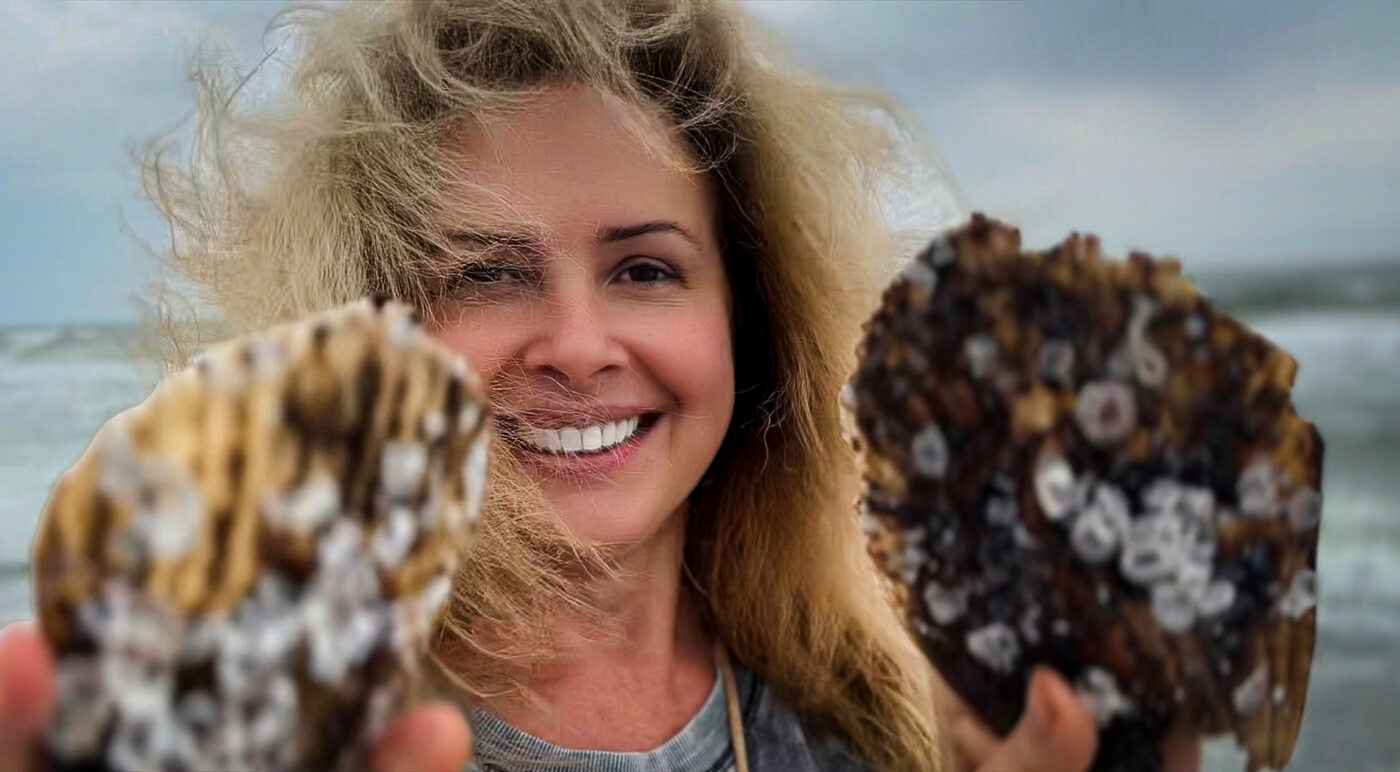
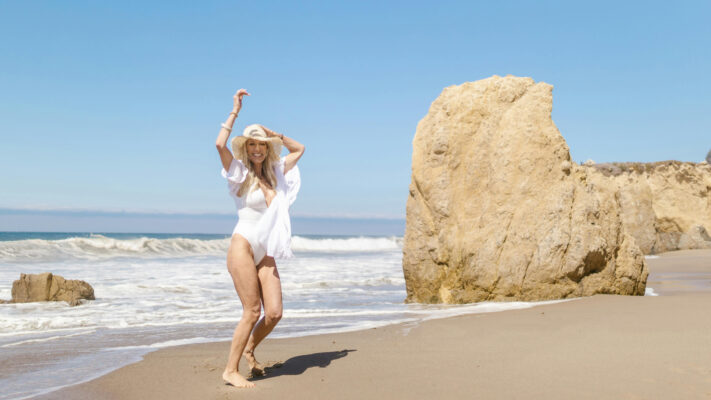
On the third day in Florida, I found myself sitting in a coffee shop across from one of the beaches I’d been evaluating. I’d ordered my usual coffee and settled into an outdoor couch under a broad awning, preparing to make notes about this location’s pros and cons. The scene in front of me was quintessentially coastal Florida – children dart around the sand like caffeinated butterflies, joggers maintaining their steady rhythm along the shore, elderly couples walking hand-in-hand at the water’s edge. Cyclists glided past on the boardwalk while people paused to stare at the ocean’s endless conversation with the shore, that hypnotic dance of advance and retreat that’s been happening since before humans had words for beauty.
The sun was doing that thing it does with water – turning ordinary light into something that looks like liquid gold, making everything it touches seem more vivid, more possible. Conversations drifted around me in the kind of ambient symphony you get when people are genuinely relaxed, when they’re not performing productivity or managing stress but just existing in a moment that doesn’t demand anything from them.
And then, without warning, I was crying.
Not the gentle, contemplative tears of a meaningful moment, but the kind of crying that comes from somewhere you didn’t know was broken. Ugly, uncontrollable sobbing that seemed to bypass my conscious mind entirely and pour out of some place that had been holding its breath for years.
It wasn’t the beauty of the scene that broke me open – though it was beautiful. It wasn’t relief or gratitude or any emotion I could name. It was recognition. My body, which had been in defensive mode for so long I’d forgotten what safety felt like, suddenly remembered. Every cell in my nervous system seemed to exhale at once, like I’d been holding tension I didn’t even know I was carrying.
This was where I belonged. Not because it made sense on paper, or fit my budget, or checked boxes on my relocation criteria, but because something deeper than logic was saying yes with a certainty that left no room for negotiation.
I sat there crying in a public place, not caring who saw me, because for the first time in years my body wasn’t fighting against my environment. The air felt right against my skin. The rhythm of the waves matched something in my chest that had been struggling to find its natural beat. The quality of light seemed to be feeding something in me that had been starving.
This wasn’t about escaping my problems or running away from responsibility. This was about finally understanding that where you live isn’t just a matter of convenience or career advancement – it’s medicine. The environment you choose either supports your healing or compounds your struggle, and I’d been choosing struggle without realizing there were other options.
Over the next six months, I did something that looked impulsive to everyone who wasn’t living in my body. I navigated the complex logistics of relocating not just my life but my entire business operation. I dealt with real estate transactions and shipping logistics and the thousand details that come with uprooting everything you’ve built in one place and transplanting it somewhere else.
People thought I was having some kind of midlife crisis or breakdown. Moving across the country because of a feeling? Leaving a successful operation to chase some fantasy about beach living? It seemed reckless, romantic, financially questionable.
But I knew something they didn’t know. I knew what it felt like to sleep on bubble wrap because your body couldn’t carry you home. I knew what it was like to lose words in the middle of sentences and wonder if your mind was permanently broken. I knew the specific terror of building something meaningful while your health was being stolen from you one exhausted day at a time.
And I also knew what it felt like when that same body suddenly recognized safety, when your nervous system stopped fighting long enough to remember what peace felt like.
The move wasn’t magical. Lyme disease doesn’t disappear because you change your zip code, and building a business doesn’t get easier because you can see the waterways from your office. But what changed was fundamental: instead of spending my energy fighting against my environment, I could finally direct it toward healing and growth.
My morning walks became part of my recovery protocol instead of stolen moments between crises. The sound of waves replaced the sound of traffic as the backdrop to my daily work. The quality of light shifted from something I barely noticed to something that actively fed my spirit every day.

What Others Call Luck
People tell me I’m lucky now. Lucky to live steps from the ocean, lucky to have made such a successful transition, lucky to have found my paradise. They say it as if good fortune just landed in my lap like a gift. Well, it might…
Or maybe, maybe what they’re seeing as luck was actually one of the hardest things I’ve ever done – learning to trust my body’s wisdom over my mind’s analysis, choosing to act on recognition rather than waiting for permission from logic, and having the courage to bet everything on a moment of belonging that could have been temporary insanity or the most important decision of my life.
I don’t think I got lucky. I got desperate enough to pay attention to what my body had been trying to tell me for years. I got brave enough to act on information that didn’t come through traditional channels. I got smart enough to understand that sometimes survival means making choices that look like luxury to people who aren’t fighting for their lives.
Every morning when I wake up and step outside to air that doesn’t hurt to breathe, to light that feels like medicine, to the sound of waves that match the rhythm my nervous system was always trying to find, I remember that what other people call luck is actually the compound interest of a thousand small acts of courage, the dividend of finally learning to listen to the wisdom your body carries, and the prize for being willing to build a life that fits the person you actually are instead of the person you think you should be.
The ocean is different every day – sometimes mirror-calm, sometimes wild with storms, sometimes playful, sometimes profound in its stillness. Just like the life I built here. Just like the business that not only survived the transition but thrived in ways I couldn’t have predicted. Just like the body that learned to trust again, slowly, carefully, but completely.
This wasn’t about finding the perfect place. This was about becoming the kind of person who could recognize home when it appeared, and brave enough to claim it.
Be Alive 🌱
Love ❤️, Julia

The Way You Hold Me (love poem)
A Love That Anchors & Holds People think it’s strange to be this devoted to [...]
conversations




DISCLAIMER: The materials and the information contained on the Julia Delaney website are provided for general and educational purposes only and do not constitute any legal, medical, or other professional advice on any subject matter. None of the information on our videos is a substitute for a diagnosis and treatment by your health professional. Always seek the advice of your physician or other qualified health providers prior to starting any new diet or treatment and with any questions you may have regarding a medical condition. If you have or suspect that you have a medical problem, promptly contact your health care provider.
